Most people don’t ignore mould — they try to deal with it.
You clean it off, wipe the walls, maybe repaint… and for a while, it looks like it’s gone.
But then it comes back.
Usually in the same place. Same wall. Same corner.
That’s when it becomes clear — it’s not just a surface issue.
Mould doesn’t appear randomly.
It forms where conditions allow it to grow — and if those conditions don’t change, it will keep coming back no matter how many times you clean it.
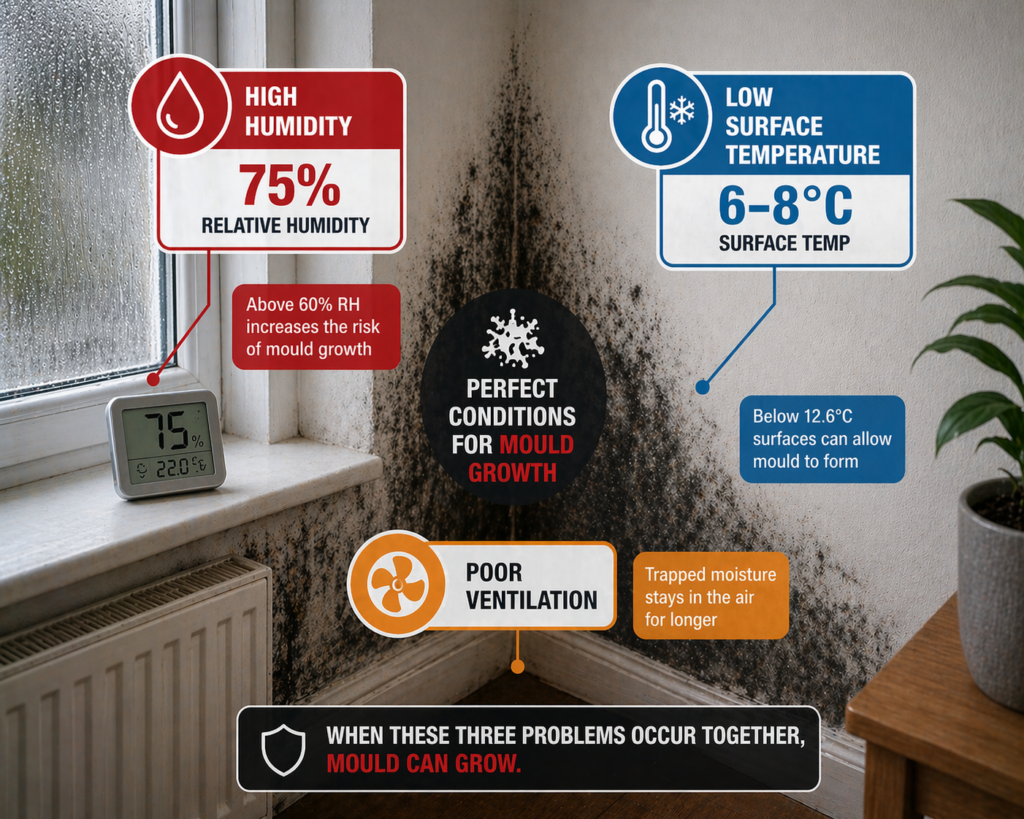
In most homes, it comes down to two things:
cold surfaces
moisture in the air
poor ventilation
When those two meet, mould has the perfect environment.
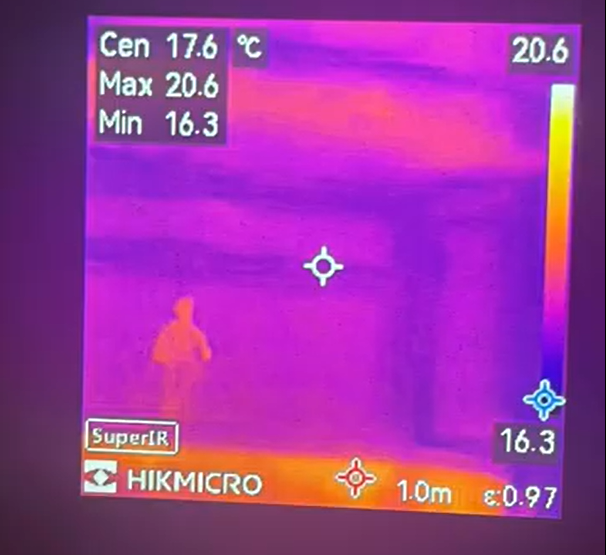
When only one or two rooms feel cold, the heating system usually isn’t the problem.
The issue is how that room is interacting with heat.
Some rooms lose warmth much faster than others, so even when you heat them, they never seem to catch up.
What’s really happening
Everyday living creates moisture.
Cooking, showering, drying clothes, even breathing — all of it adds moisture into the air.
That moisture moves around the house until it finds a cold surface.
When it hits that surface, it turns into condensation. Over time, that dampness builds up — and that’s where mould starts to grow.
Why cleaning doesn’t solve it
Cleaning removes the visible mould, but it doesn’t change the conditions behind it.
If the wall is still cold and moisture is still present, the same thing happens again.
That’s why it often returns in exactly the same spot.
Where mould usually appears first
You’ll often see it in:
corners of external walls
behind wardrobes or beds
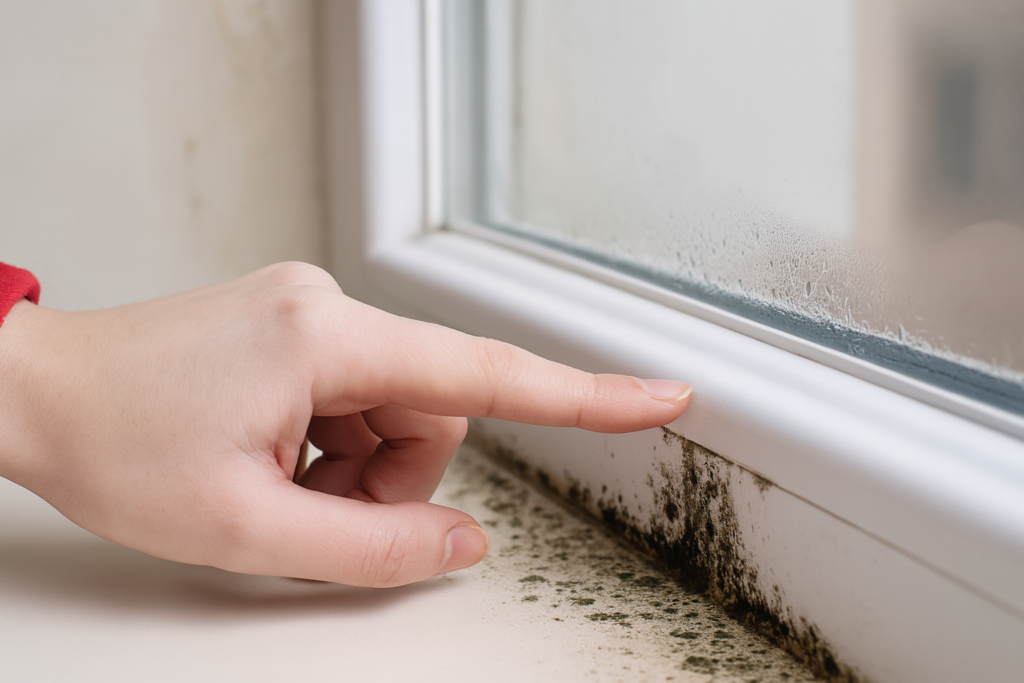
around windows
in colder rooms like bedrooms
These areas tend to have less airflow and lower surface temperatures, so moisture settles there more easily.
What actually stops mould long term
To stop mould properly, you need to change the conditions that allow it to grow.
That means:
– reducing moisture in the air – increasing the temperature of cold surfaces
When those two are balanced, mould no longer has the environment it needs.
The role of ventilation
Ventilation helps remove moisture from the air.
Simple things like allowing airflow, using existing ventilation properly, and avoiding moisture build-up all play a part.
But on its own, ventilation doesn’t always solve the issue — especially if the walls remain cold.
The role of warmer surfaces
This is the part that often gets missed.
If the wall surface stays cold, condensation will continue to form there — even if ventilation is improved.
Once that surface temperature is raised, the moisture has nowhere to settle, and the conditions for mould are reduced significantly.
How we approach it
The first step is understanding why mould is forming in that specific area.
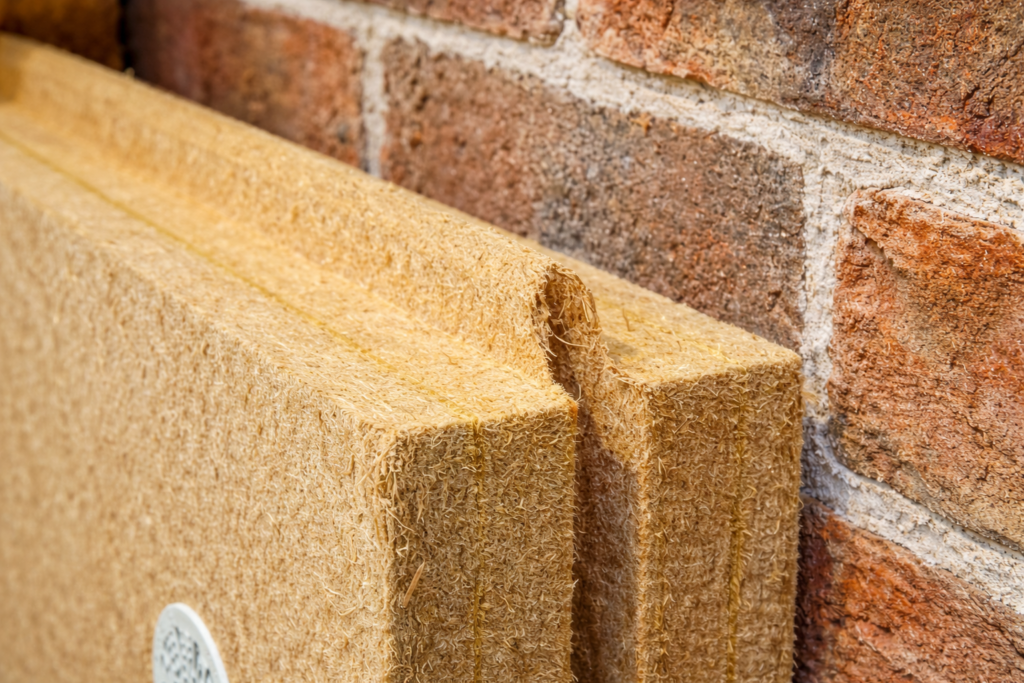
Then the focus is on improving how that part of the house performs. In some cases, that involves internal wall insulation. In others, a thinner solution like cork can improve the surface temperature without affecting space.