
Condensation & Damp Solutions
Warm Walls Stay Drier and Help Reduce Mould Problems
Condensation and damp are common issues in solid brick homes, especially where walls have no insulation. When internal surfaces become colder than the surrounding air, moisture condenses, leading to black mould, damp patches and damage to plaster.
This page explains why condensation forms, what the signs are, and the practical building solutions used to manage and prevent it.
What Causes Condensation on Walls?
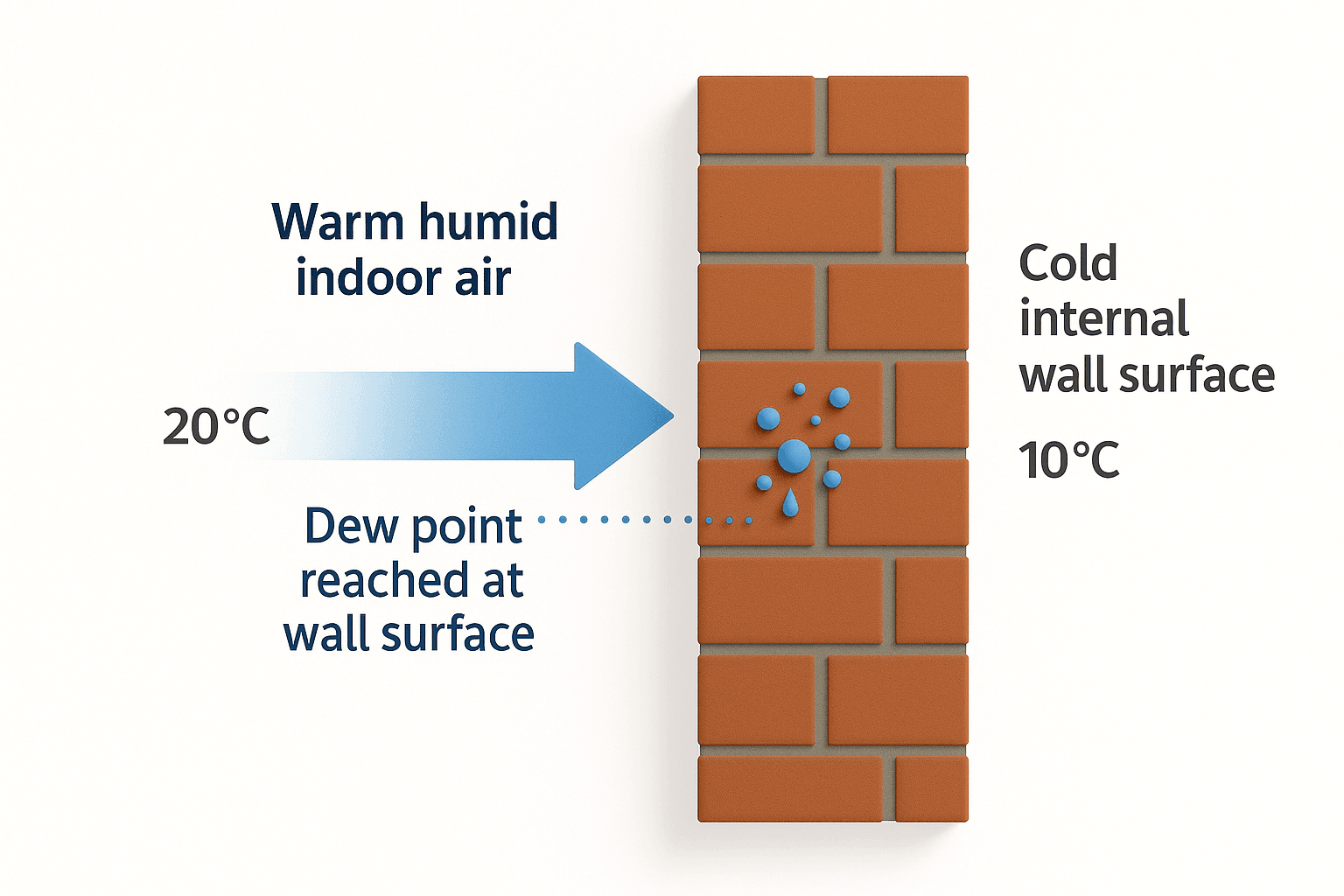
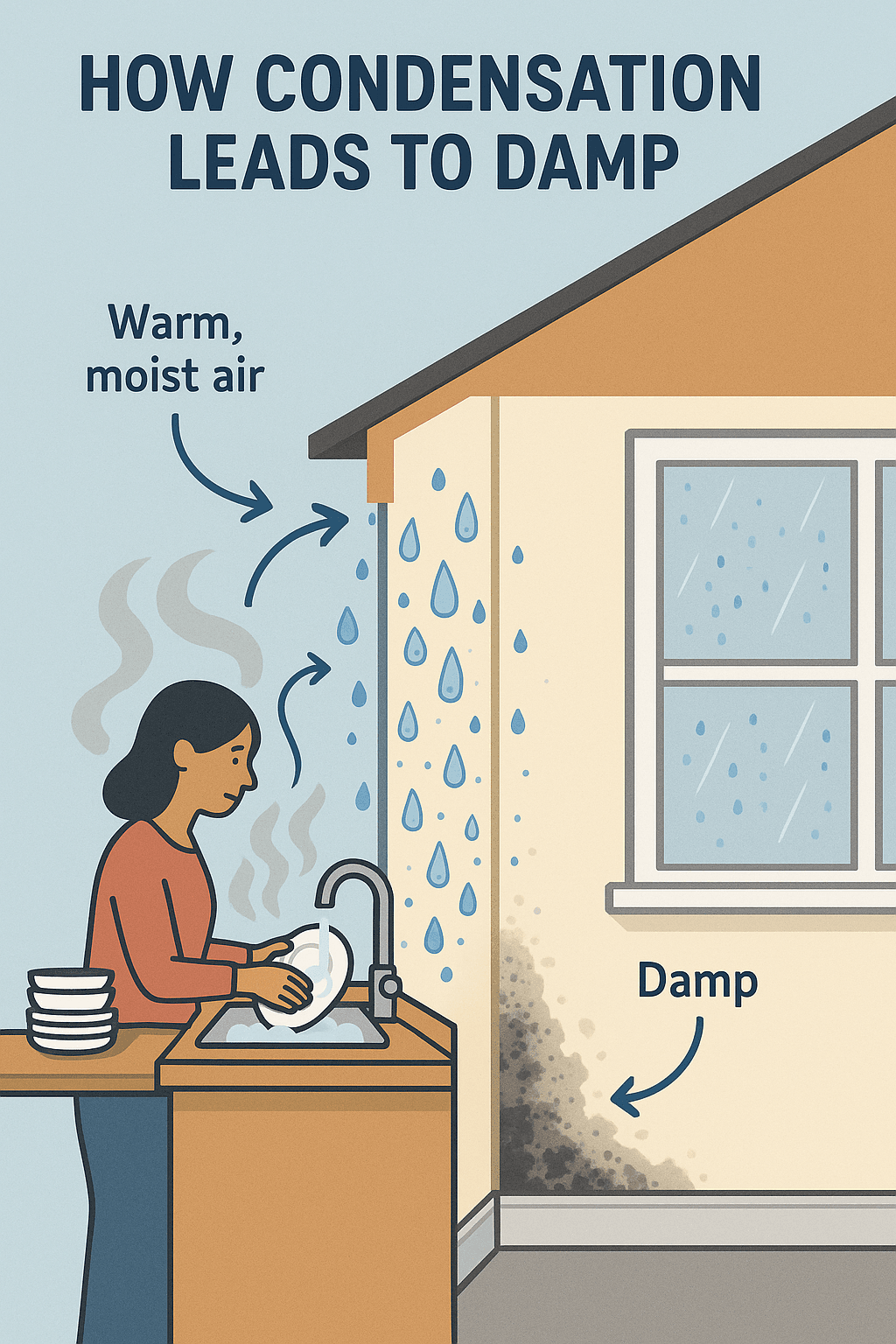
Condensation occurs when warm, moist air meets a colder surface and the temperature of that surface falls below the dew point. Several factors contribute to this in typical UK homes:
- Cold external walls
- Poor ventilation or limited airflow
- Warm moist air from daily activities
- Thermal bridges and cold corners
- Furniture placed tightly against walls
- Bay windows with cold internal surfaces
Signs of Condensation-Related Damp
Recognising these signs helps identify whether condensation, rather than penetrating damp, is the cause.
- Water droplets on walls or windows
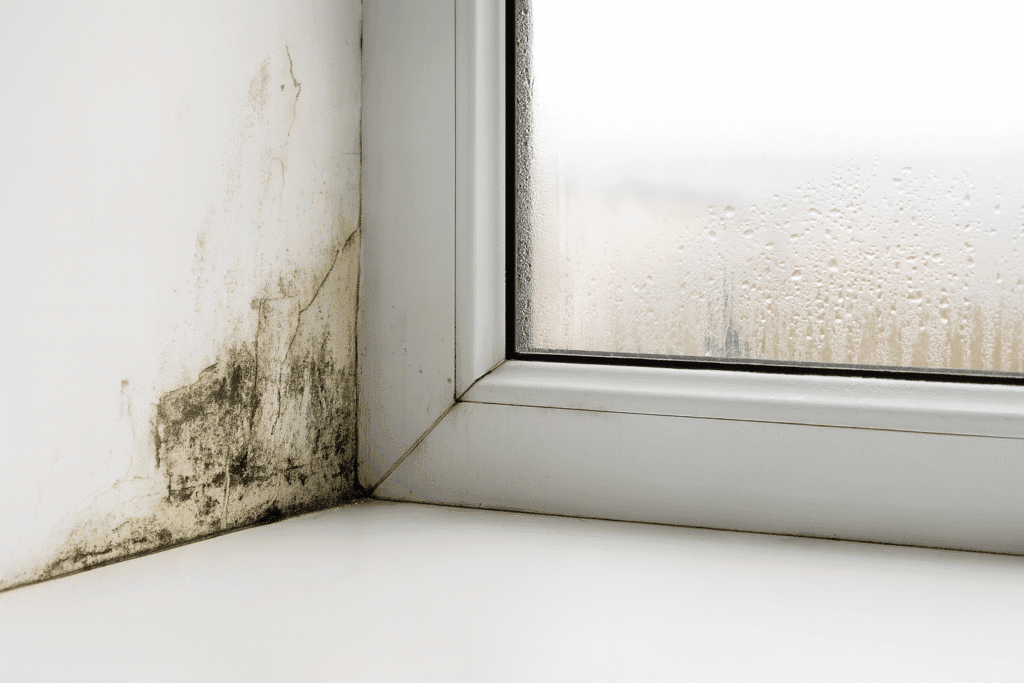
- Black mould forming on corners or edges
- Musty or damp smells
- Peeling paint, blistering or blown plaster
- Condensation on cold junctions and bay windows
- Persistent wet patches with no external water source
How Condensation Leads To Damp
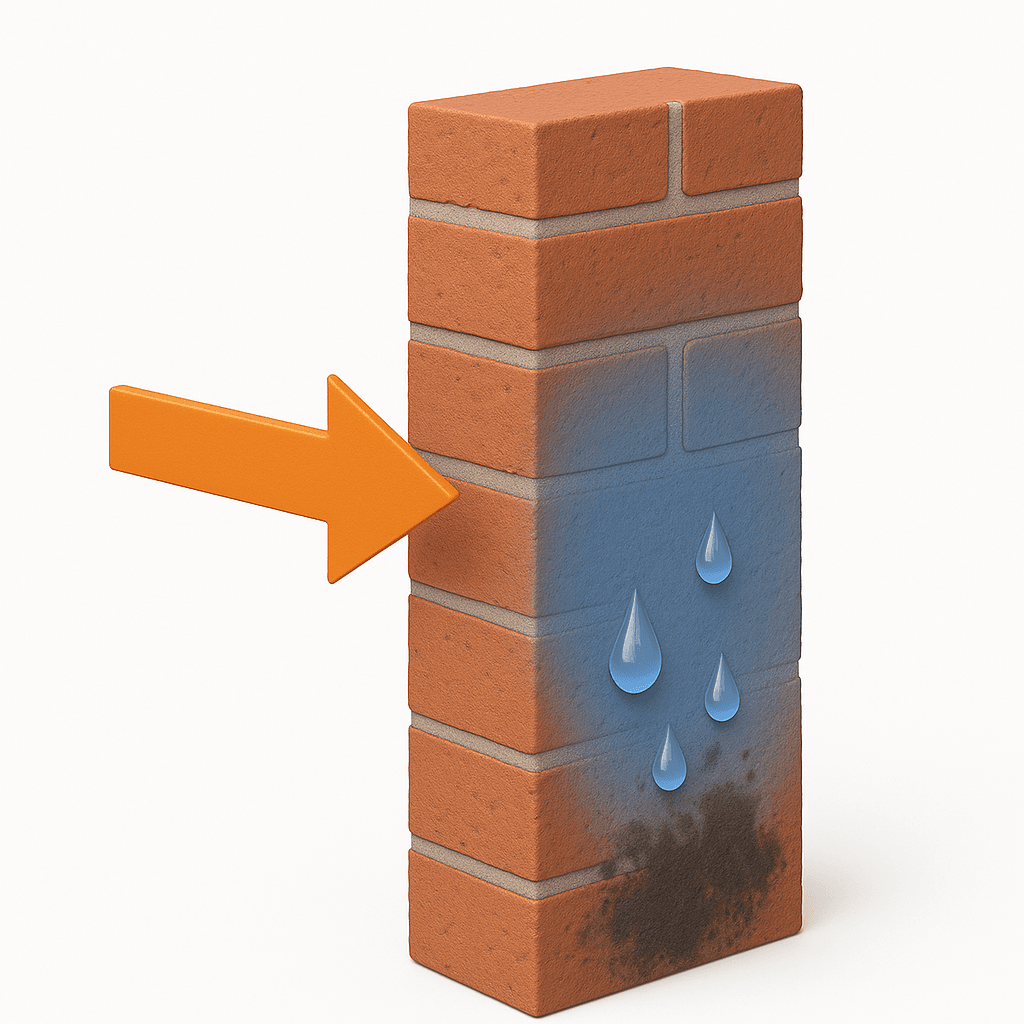
Condensation damp happens when the same cold areas become wet day after day. Moisture collects faster than the wall can dry, causing:
- Mould spores to grow
- Wet, dark staining
- Detachment of plaster and paint
- Cold, unhealthy indoor conditions
This is different from penetrating or rising damp — here the moisture comes from inside the home, not outside.
Solid brick homes are particularly vulnerable because the walls lose heat quickly and their internal surfaces often fall below dew point in colder months.
Why Solid Brick Homes Are More Pr
Older solid-wall properties are more prone to condensation because they have no cavity, no insulation, and often contain past repairs made with cement, gypsum, or plastic paints. These materials reduce breathability and trap moisture, while the solid brick construction loses heat quickly, leaving internal wall surfaces much colder. As a result, these homes are far more likely to experience condensation-related damp, especially in winter. In many cases, previous non-breathable finishes such as cement render, gypsum plaster or waterproof paints further limit the wall’s ability to dry, which directly affects the type of insulation system that is appropriate.
Practical Solutions For Condensation & Damp
Condensation and damp are generally managed through three key approaches:
- Reducing excess indoor moisture
- Improving ventilation and air movement
- Raising internal surface temperatures to reduce cold spots
Below are the main solution types used in UK homes.
Improve Ventilation & Humidity Control
Improving airflow helps stop warm, moist air from settling on cold walls. This can include upgrading extractor fans, adding background ventilation such as trickle vents, using continuous systems like MEV/MVHR, or installing Positive Input Ventilation (PIV) to stabilise indoor humidity. These measures reduce moisture in the air and help prevent condensation forming in the first place.
Raise Internal Wall Temperatures With Insulation
Cold walls are a major cause of condensation, and internal insulation helps keep the wall surface warm enough to stay above the dew point. Where the wall is suitable, breathable systems — such as wood fibre, cork or mineral wool with lime/mineral plaster — can allow controlled drying. However, many solid brick walls have previous non-breathable treatments (cement renders, gypsum, plastic paints), meaning true breathability isn’t always achievable. In these cases, moisture-closed insulated boards such as PIR or phenolic boards, combined with a correctly detailed vapour control layer (VCL), may be the safer and more appropriate option. The correct system depends on wall condition, moisture behaviour and ventilation.
To learn more about insulation options and how they help reduce condensation, see our page on Internal Wall Insulation
Treat Localised Cold Spots & Thermal Bridges
Even when walls are insulated, certain areas can remain cold and continue to attract moisture.
These typically include bay windows, window reveals, corners, chimney breasts and loft-to-wall junctions.
Cold spots can be improved with high-performance boards such as XPS or aerogel, or with insulated or foil-backed plasterboard in suitable constructions.
To see how insulation helps reduce cold spots in bays, visit our Bay Window Insulation.
Targeting these areas helps prevent recurring condensation in isolated patches.
Choosing The Right Solution For Your Walls
Choosing the right solution depends on how your home is built and how it behaves. Factors such as wall construction, past treatments like cement render, gypsum or plastic paint, current humidity levels, thermal bridging, ventilation and overall moisture behaviour all influence the best approach. A professional assessment helps determine whether a breathable system, a moisture-closed system, or a combination of both is the safest and most effective option for your property.

Need Help With Condensation or Damp?
If your home has cold walls, mould or persistent condensation, a professional assessment can help identify the cause and outline the most appropriate solution for your property.