
If you look at most UK streets, you’ll see the same story repeated again and again: cracked render, patchy repainting, algae streaks on north-facing walls and homes that never quite look as smart as their owners want them to. The problem isn’t neglect — it’s that many traditional external finishes simply aren’t suited to the British climate or the way our housing stock behaves.
This is exactly why spray cork is gaining traction as an external wall solution. Not as a gimmick, and not as “just another paint”, but as a breathable, flexible external coating that protects, insulates and improves appearance at the same time.
The Real Problem with Traditional Renders and Paints
Most conventional external finishes are rigid. Cement-based renders don’t like movement. Masonry paints sit on the surface and degrade under UV, moisture and pollution. In a country where walls are exposed to driving rain one day and strong sun the next, that rigidity becomes a weakness.
Hairline cracks form, water finds its way in, staining appears and before long the cycle starts again: patch repairs, repainting, more expense and more frustration. This is especially common on older properties, coastal homes and buildings that experience even minor structural movement.
How Spray Cork Behaves Differently
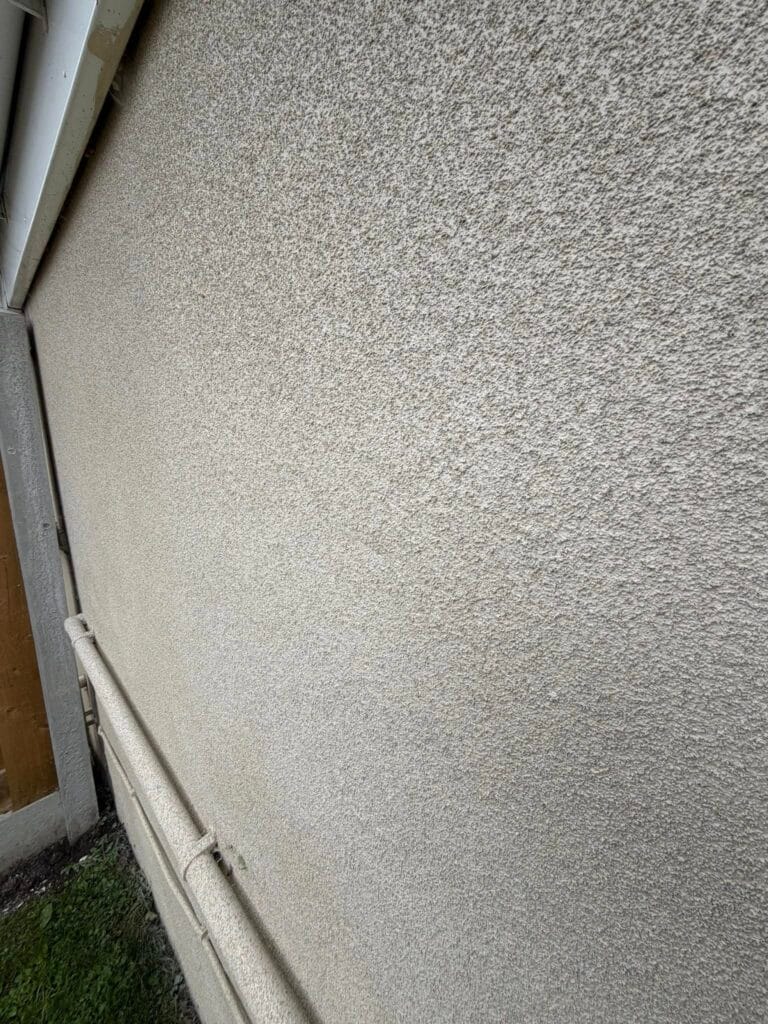
Spray cork works because cork itself behaves differently to rigid materials. It’s naturally elastic, breathable and packed with microscopic air cells. When applied externally as a thin sprayed coating, it forms a continuous membrane that flexes with the building rather than fighting it.
Instead of cracking as walls move slightly through temperature changes, spray cork absorbs that movement. Instead of trapping moisture behind a sealed surface, it allows vapour to escape while resisting liquid water from outside. This combination is what makes it so effective as an external wall coating in UK conditions.
More Than Just a Decorative Finish
Although many homeowners first look at spray cork to improve kerb appeal, the benefits go well beyond appearance. As a thin external coating, it helps reduce cold bridging across the wall surface and improves how the wall holds heat. It won’t replace a thick external wall insulation system where major U-value upgrades are required, but it does make a noticeable difference to comfort — especially on exposed elevations.
There’s also an acoustic benefit. Cork naturally absorbs sound, which can help soften external noise such as traffic or general street activity, particularly in urban settings.
A Practical Alternative to Full External Wall Insulation
Traditional EWI systems involve insulation boards, mesh coats, trims and significant changes around windows, doors and rooflines. For some properties, that level of intervention simply isn’t desirable or practical.
Spray cork sits neatly between repainting and full EWI. It’s thin, seamless and visually subtle, making it well suited to retrofits, period homes and properties where owners want improvement without dramatically altering the building’s appearance.
Why It Works So Well on UK Housing
The UK housing stock is varied, ageing and often built with solid walls that were designed to breathe. Spray cork aligns well with this because it doesn’t seal walls shut. It works on brick, stone, existing render and even pebble dash, provided the surface is sound and properly prepared.
For coastal and exposed properties, the benefits are even more obvious. Salty air, wind-driven rain and UV exposure destroy standard finishes quickly. Spray cork’s durability and flexibility help it stand up to these conditions far better over time.
Longevity and Maintenance
One of the biggest frustrations with external finishes is maintenance. Repainting every few years isn’t just costly — it’s disruptive. Spray cork is designed as a long-term coating, not a temporary cosmetic layer. When applied correctly to a sound substrate, it offers decades of performance with minimal upkeep, staying cleaner for longer and resisting the cracking and peeling associated with traditional systems.
Why Installation Matters
Like any specialist coating, the product alone isn’t enough. The success of spray cork depends heavily on correct surface assessment, preparation and application. Existing render must be sound, moisture issues addressed and the coating applied at the correct thickness with proper detailing.
This is why using an approved spray cork applicator matters. When installed properly, spray cork delivers exactly what it promises — a durable, breathable, protective and visually clean external finish.
Is Spray Cork Right for Your Home?
Spray cork isn’t a one-size-fits-all solution, and it shouldn’t be sold as one. It’s best suited to homeowners who want to improve the appearance and performance of their external walls without the disruption of major building work. It’s particularly effective where cracking, staining, exposure and repeated repainting have become an ongoing issue.
If you’re considering options for upgrading your exterior, it’s worth understanding how spray cork compares to traditional render, paint and insulation systems — and whether it fits your property and goals.